On this page
The short version
- Scalping means holding positions for seconds to minutes and targeting a few pips, so trading costs are paid many times per day instead of a few times per month.
- At scalping frequency, costs compound: an illustrative 1-pip spread on a standard lot is about $10 per round trip, or roughly $25,000 over a 250-trade-day year at 20 trades per day.
- With a 5-pip target against a 5-pip stop and a 1-pip round-trip cost, an illustrative breakeven win rate is 60% — a 55% win rate is still expected to lose.
- Last look lets a liquidity provider accept or reject a trade request against the quoted price; the FX Global Code expects transparency about how it is applied.
- Some broker agreements restrict very-short-duration trading through time-in-trade or abusive-trading clauses — read your actual client agreement before scalping.
Scalping is the most talked-about and least explained style in retail forex. The pitch is always the same: enter, take a few pips, exit, repeat. Do that twenty times a day and small profits supposedly become large ones. What the pitch usually leaves out is that scalping multiplies something most traders think about least — the cost of each trade — and puts you on the wrong side of execution realities that big institutions designed. This article explains what scalping actually involves, why the cost math is brutal, and what you need to check before trying it.
What scalping actually is
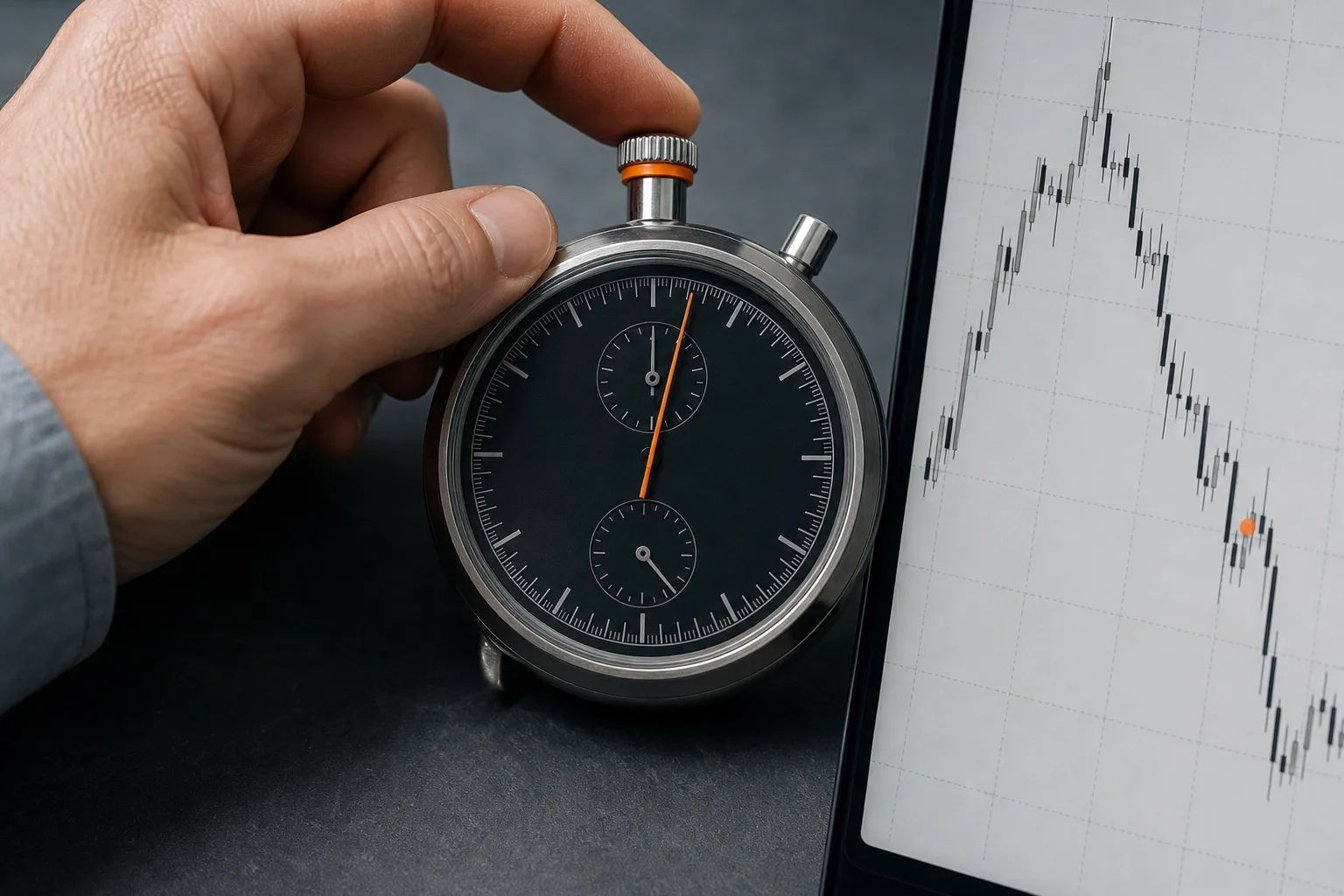
A scalper holds positions for seconds to minutes and targets small price moves, often just a few pips — the smallest conventional price increment in forex. Instead of trying to capture a 100-pip trend, a scalper aims to harvest 3–10 pips at a time, repeatedly, often during the most liquid hours of the trading day. This is distinct from day trading, which typically closes positions before the day ends but holds them for hours, and from swing trading, which holds for days or weeks.
Because profit per trade is tiny, scalpers trade frequently and often size their positions aggressively relative to the move they target. The style depends on tight spreads, fast execution, and enough liquidity that a few pips of movement are worth a meaningful amount of money. Note that "scalping" means something different in securities regulation — there it often refers to advisers trading ahead of their own recommendations, which is a fraud issue, not the retail forex trading style described here.
Scalping operates inside the largest financial market in the world. The Bank for International Settlements' triennial survey measured OTC foreign exchange turnover at $7.5 trillion per day in April 2022, with spot trades — the instrument most relevant to short-term retail trading — accounting for 28% of that turnover [1]. Deep liquidity is exactly why spreads on major pairs are small. It is also why scalping against that market, pip by pip, is a competition over fractions that institutions and high-frequency firms fight over with far better tools.
Why scalping costs compound faster than any other style
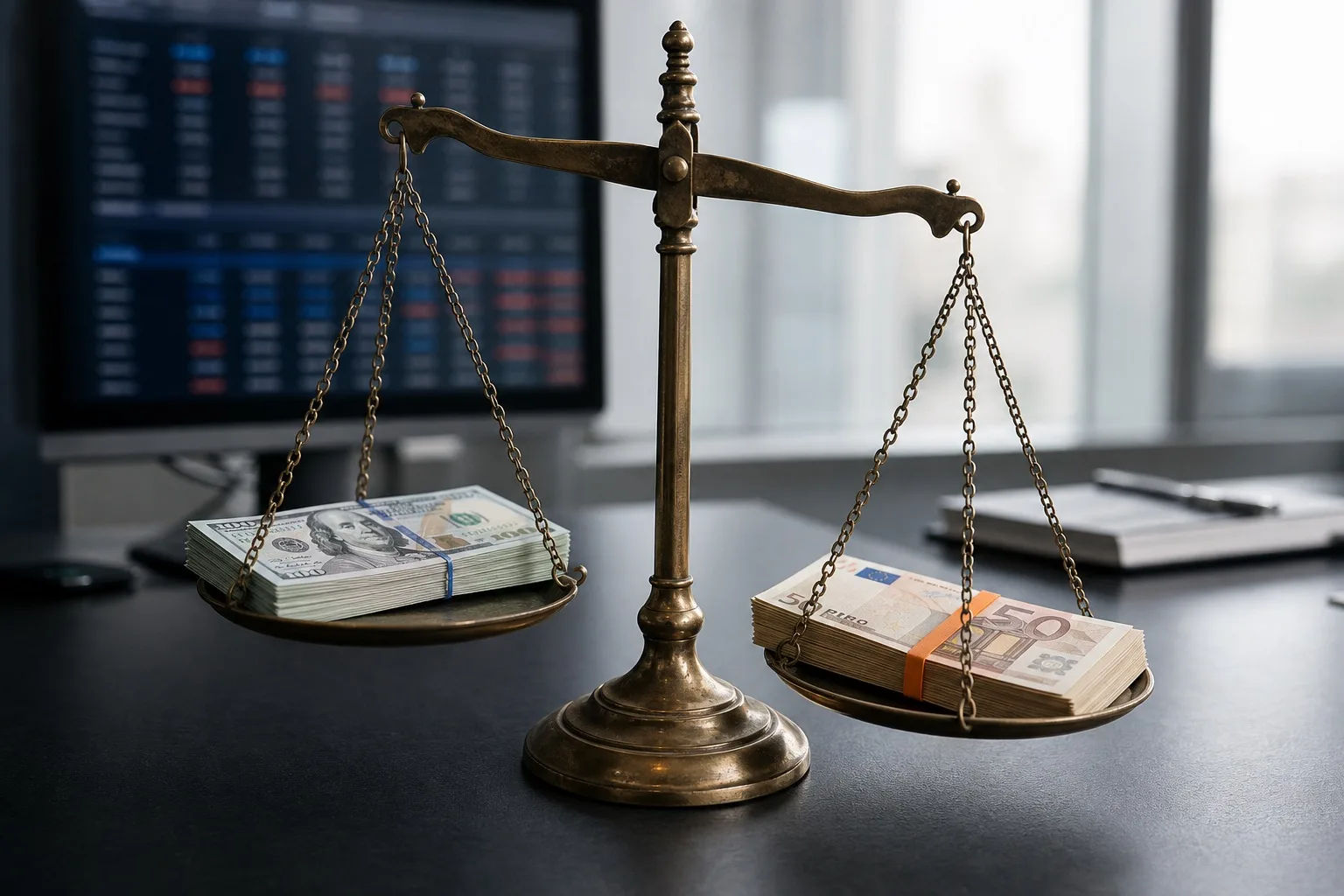
Every trade you make pays the trading cost: most commonly the spread between bid and ask, and on some account types a commission on top. A swing trader pays that cost a handful of times a month. A scalper pays it many times a day.
The arithmetic is unforgiving. Consider an illustrative EUR/USD example on a standard account:
Advertised spread: 1.0 pip. On one standard lot (100,000 units of base currency), one pip of EUR/USD is conventionally worth about $10, so a full round-trip spread costs roughly $10 per trade.
Twenty round-trip trades in a day: roughly $200 per day in costs.
Trading five days a week: about $1,000 per week, and around $25,000 over a 50-week trading year.
These numbers are constructed for illustration — your actual spread depends on the broker, account type, instrument and market conditions — but the shape of the math is not in dispute: at scalping frequency, the cost line is one of the largest numbers in your profit-and-loss statement, whether you win or lose each trade.
This is why account type matters so much for scalpers. Standard accounts fold the broker's margin into the spread; raw-spread accounts show a near-zero spread and charge a commission instead. Running the same illustrative scalper through a raw account — a 0.2-pip spread plus a $7 per standard-lot round-trip commission (a commonly advertised range; check your own pricing) — gives a total round-trip cost of roughly 0.9 pips, close to the standard account's 1 pip. The comparison is not automatically favourable in either direction; what matters is the total round-trip cost on the pairs you actually trade, which you can read directly from your broker's pricing pages.
The breakeven win rate nobody quotes
Scalping's economics can be reduced to one question: after costs, is your edge still positive?
Take a scalper who risks 5 pips to make 5 pips on every trade, paying a 1-pip round-trip cost. If the win rate were exactly 50%, the gross expectation is zero — and after costs, the account bleeds. To merely break even, this scalper needs a win rate of 60%:
Expected value per trade = (win rate × 5 pips) − (loss rate × 5 pips) − 1 pip of cost.
Setting that to zero gives win rate = 0.5 + 1 ÷ (2 × 5) = 60%.
These figures are a deliberately simple, illustrative construction — not a measured result from any account — but they demonstrate why scalping is structurally hard: the smaller your target relative to the cost, the higher the win rate you need just to stand still. Cut the target to 3 pips against the same 1-pip cost and the breakeven win rate rises to roughly 67%. A strategy that wins 55% of its 5-pip trades — a genuinely good hit rate — is still expected to lose about half a pip per trade after costs.
And the reverse direction is worse: most scalpers pay more than the quoted spread in practice, because of what happens next.
Execution realities: last look and slippage
A scalp that needs to catch 3–5 pips is exquisitely sensitive to how your order is filled. Two mechanisms matter.
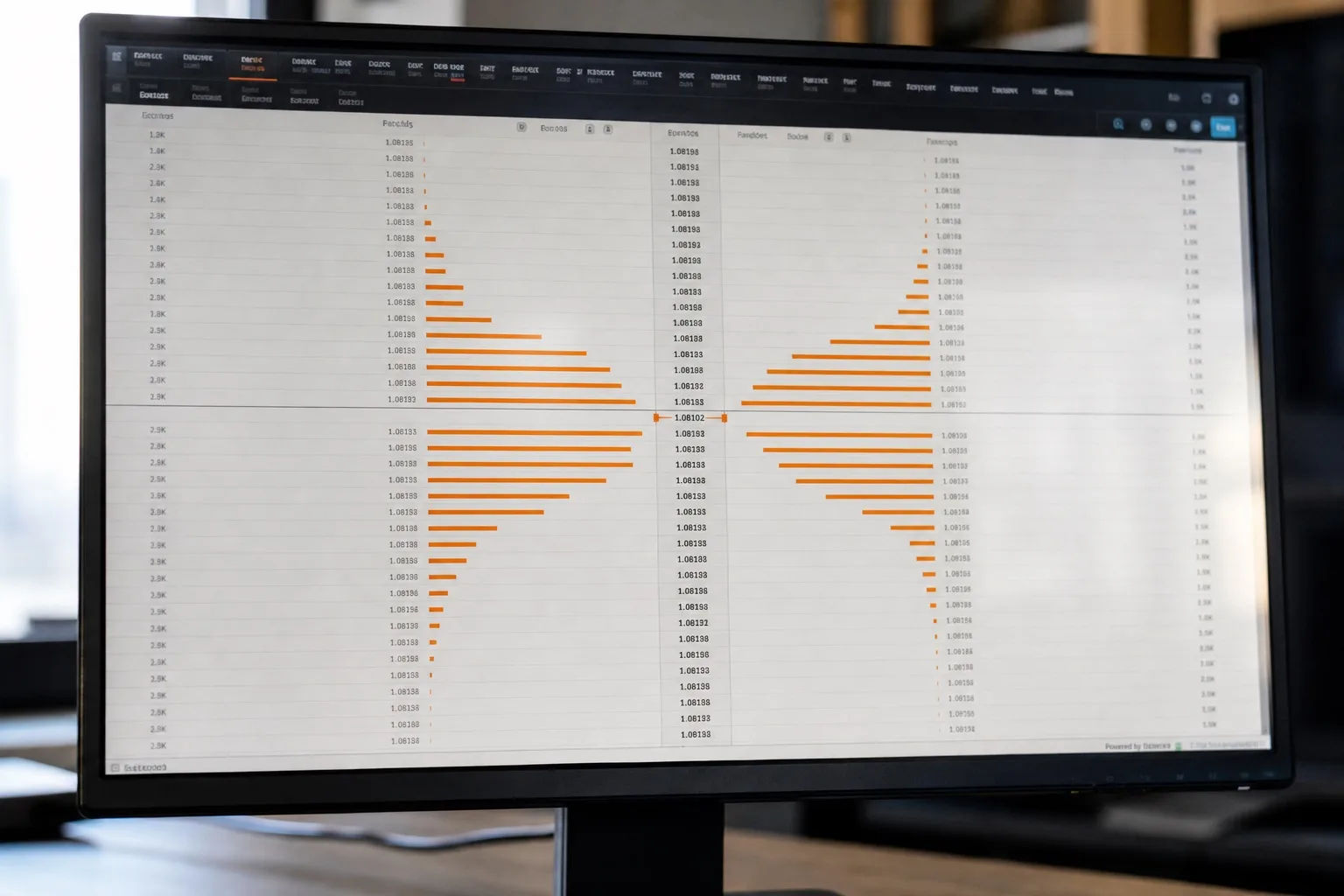
Last look. On many electronic trading venues and with some broker execution models, the liquidity provider receives your trade request and has a final window to accept or reject it against the quoted price. The FX Global Code — a set of principles developed by central banks and market participants, updated in December 2024 — describes last look as "a practice utilised in Electronic Trading Activities whereby a Market Participant receiving a trade request has a final opportunity to accept or reject the request against its quoted price," and expects participants to be transparent about whether, and how, price changes affect the decision to accept or reject, and about the typical duration of the check [2]. The practical upshot for a scalper: in fast markets, the fills you most want to happen (the winners slipping away from you) may be accepted, while requests made when the price briefly moved in your favour may be rejected. Any broker applying last look should disclose it — but you may have to look for the disclosure.
Slippage. Between the moment your order is sent and the moment it is filled, the market can move. On a style where the profit target is a handful of pips, one pip of negative slippage can consume a third of the trade's potential profit. This compounds the cost math above rather than replacing it. (For a deeper treatment, see our articles on slippage and spread widening around news.)
Neither mechanism is inherently unfair — last look exists as a risk-control mechanism, and slippage reflects real market movement — but both systematically erode strategies whose edge is measured in single pips.
Broker terms can restrict scalping outright
Unlike the two mechanisms above, this one is contractual: some brokers' client agreements restrict or disfavour very-short-duration trading. Common forms include minimum time-in-trade requirements before an order is accepted, incentives structured so that frequent small-profit withdrawals or pure cost-harvesting styles are discouraged, or discretion in the agreement to treat certain trading patterns as abusive. Importantly, the details differ by broker, by legal entity, and by jurisdiction — there is no universal rule, and it would be wrong to claim a specific percentage of brokers restrict scalping. What is universally true is that the answer lives in the specific agreement you signed. Read your actual client agreement and order-execution policy for the time-in-trade, execution and "abusive trading" clauses before building a style on very short holds. If the terms are unclear, ask the broker to point to the clause in writing.
A related practical point: scalping only makes sense on instruments and sessions where spreads stay tight. During thin liquidity — the rollover hour, or just before and after major news — spreads widen and the cost math above gets dramatically worse, which is why many scalpers concentrate on the London and New York overlap and avoid event windows.
Who scalping tends to suit — and who it usually doesn't
Scalping suits traders who can watch the market continuously during liquid sessions, who have verified the total round-trip cost of their account, who understand their broker's execution model, and who can accept that many trades per day means cost pressure compounds and mistakes are cheap to repeat. It demands fast, deliberate decision-making and strict risk limits, because a day of twenty trades multiplies both discipline and error.
It usually doesn't suit traders who can only check the market a few times a day, who trade during illiquid hours, who have not measured their true round-trip costs, or who are still learning order mechanics — a beginner's mistakes arrive twenty times a day instead of twice a month. And a strategy targeting a few pips per trade has no room for the higher spreads of exotic pairs or event windows.
None of this makes scalping a bad style by definition, any more than swing trading is a good one by definition. It makes scalping a style whose viability depends on numbers most traders never check.
What to check before you try it
Total round-trip cost on your specific pairs and account type — spread plus commission, read from your broker's pricing page, not from marketing copy.
Execution model and last-look disclosure — whether your broker or its liquidity providers may reject trade requests, and under what conditions.
Client agreement clauses on time-in-trade and trading styles that the broker may restrict.
Sessions and windows — when your pairs actually trade at tight spreads, and when spreads reliably widen.
Cost-adjusted expectations — the win rate your target-versus-stop setup needs after costs, computed before you trade, not discovered after.
Scalping's core trade-off is easy to state and hard to escape: you are trading frequency for size, and every trade hands a slice of the move to the cost side of the ledger. Before your first scalp, make sure the slice is smaller than your edge — and verify that in writing, not in hope.
Sources
Bank for International Settlements, "Triennial Central Bank Survey: OTC foreign exchange turnover in April 2022" — $7.5 trillion daily turnover; spot 28% share. https://www.bis.org/statistics/rpfx22_fx.htm
FX Global Code (Global Foreign Exchange Committee), updated December 2024, Principle 17 — definition and disclosure expectations for last look. https://www.globalfxc.org/docs/fx_global.pdf
Sources & further reading
Check the original source for its scope, publication date and latest terms.
- BIS Triennial Central Bank Survey: OTC foreign exchange turnover in April 2022https://www.bis.org/statistics/rpfx22_fx.htm
- FX Global Code (Global Foreign Exchange Committee), updated December 2024 — Principle 17: Last lookhttps://www.globalfxc.org/docs/fx_global.pdf
For education and research, not personal investment advice. Trading involves risk. Broker terms and protections depend on your country, account and contracting legal entity.